New Ground – Textile Stories
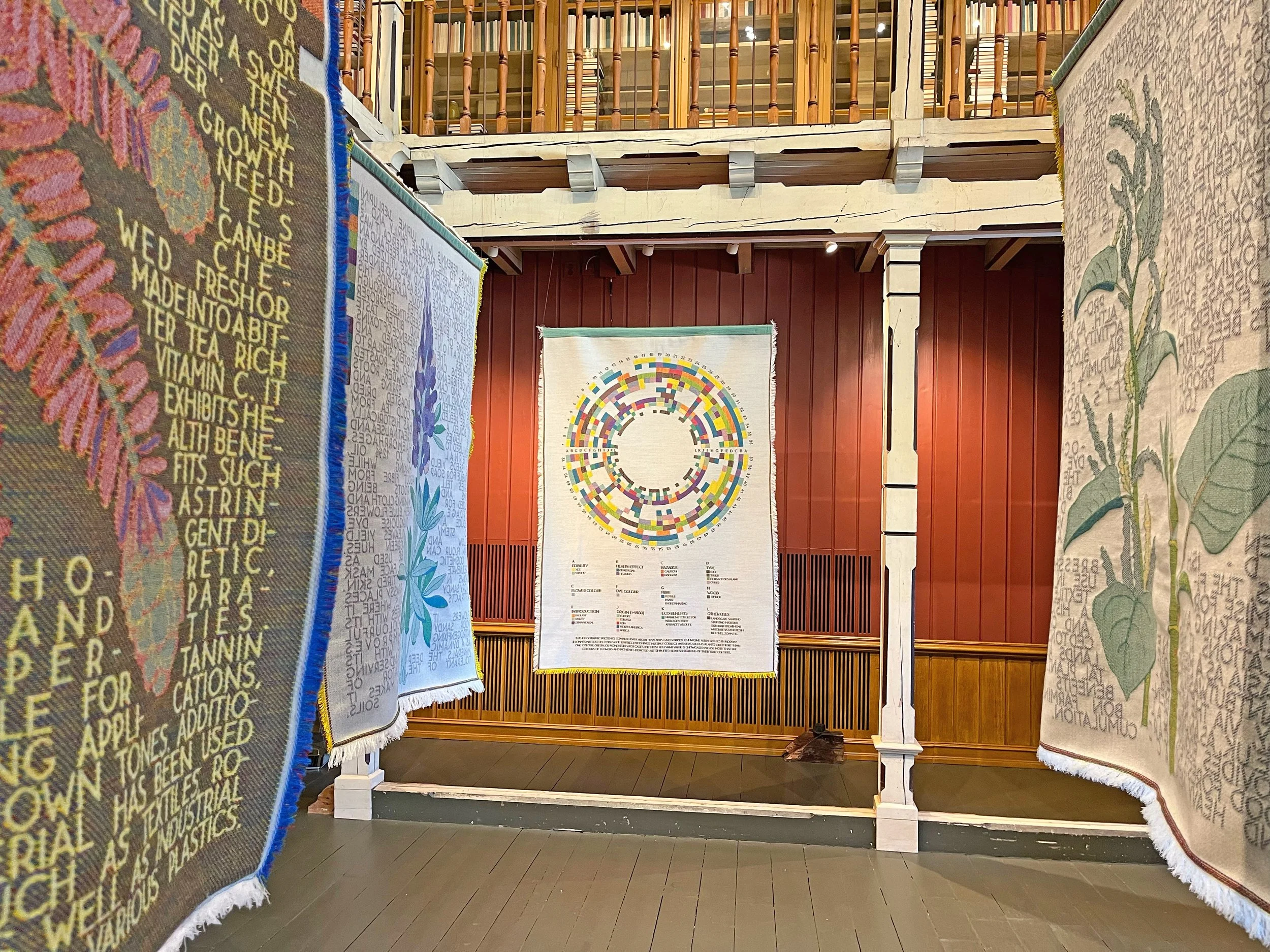
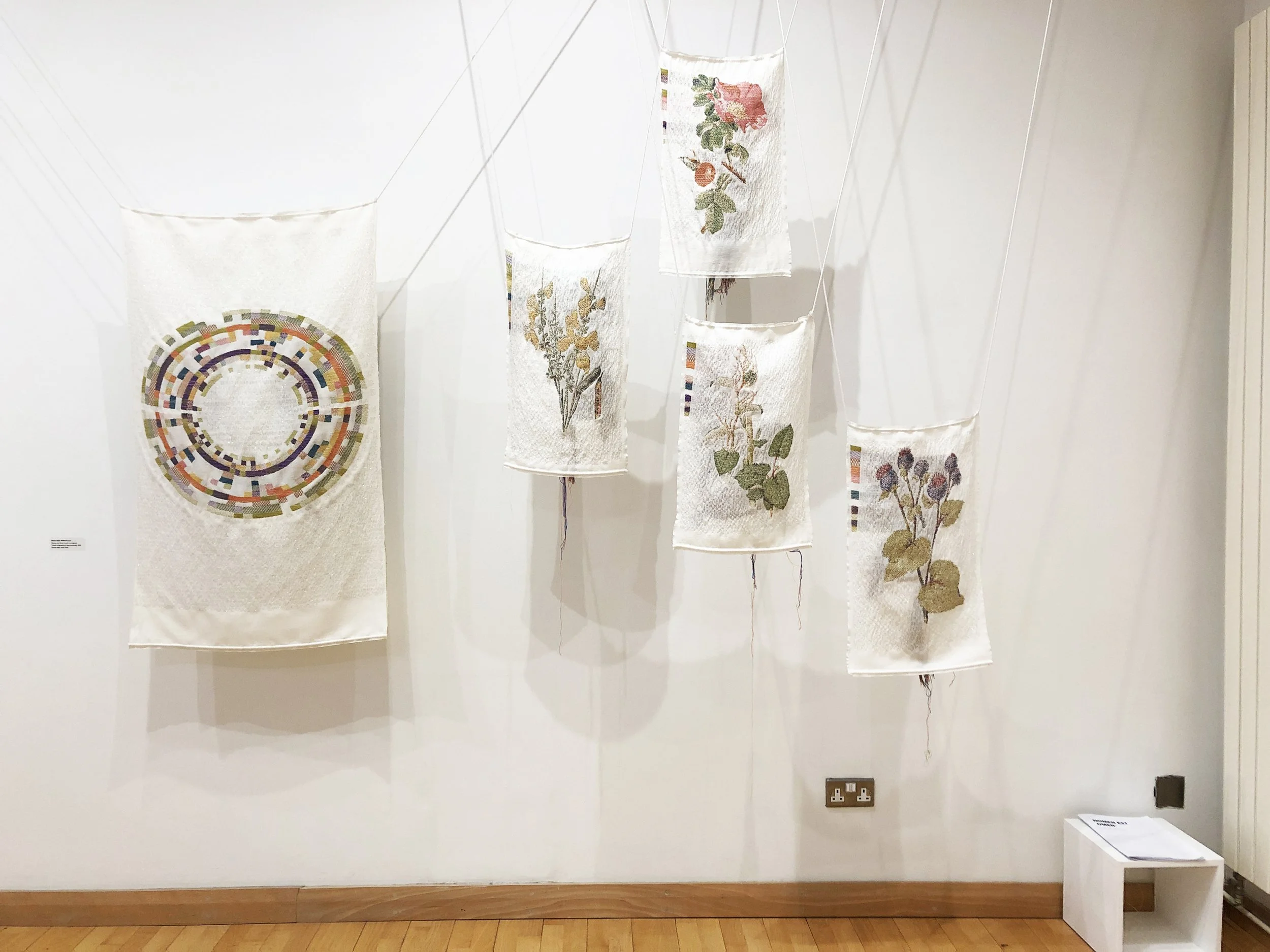
A series of seventeen woven textiles — Flags — forms a central body of work within the research on the unwanted plants. The series explores how weaving can serve as both a material and conceptual method for storytelling, mapping connections between plants, people, and places.
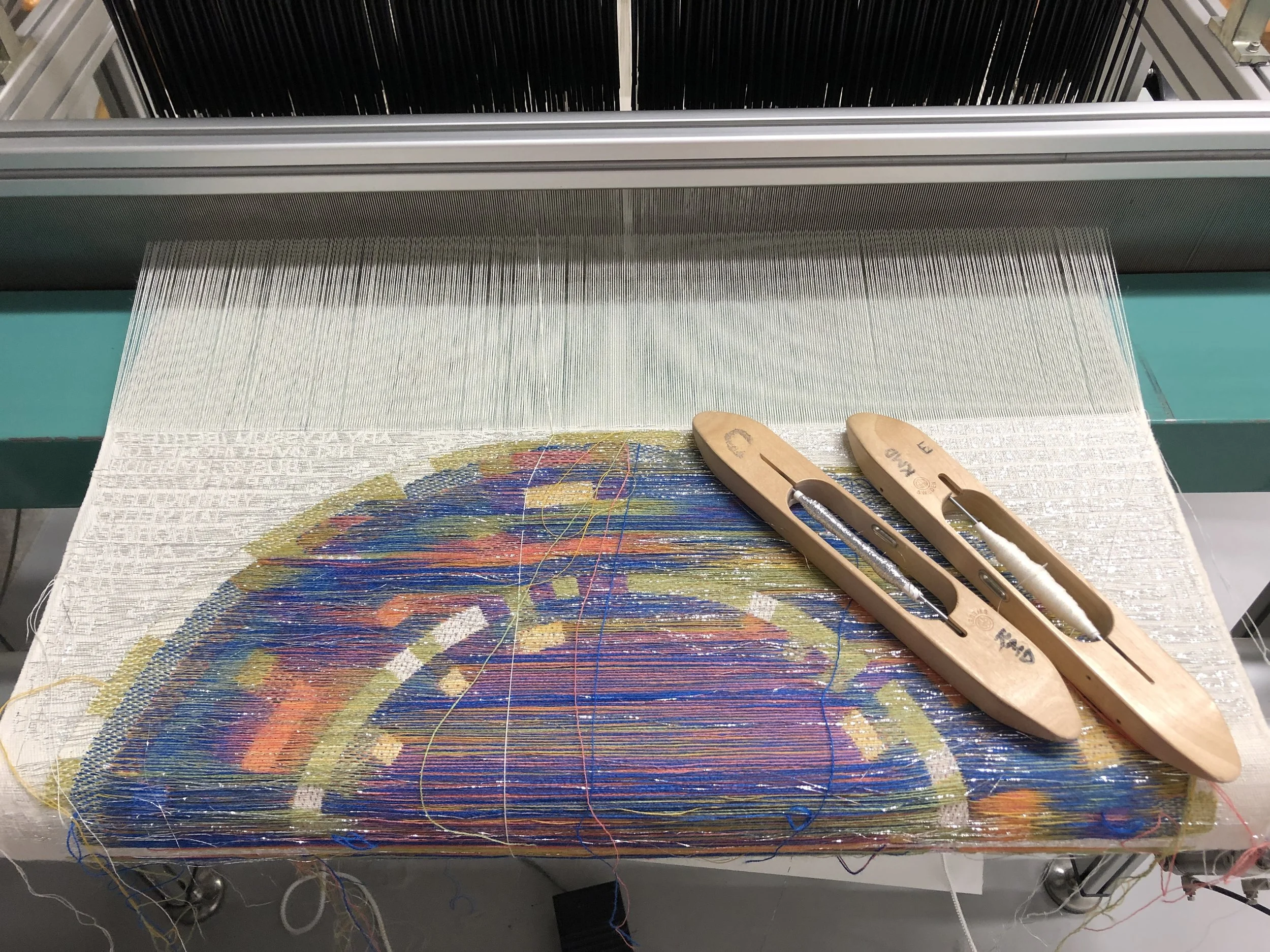
The largest piece, Matrix, functions as a visual and structural core — a woven map of knowledge and relations that connects stories, experiments, and interdisciplinary conversations.
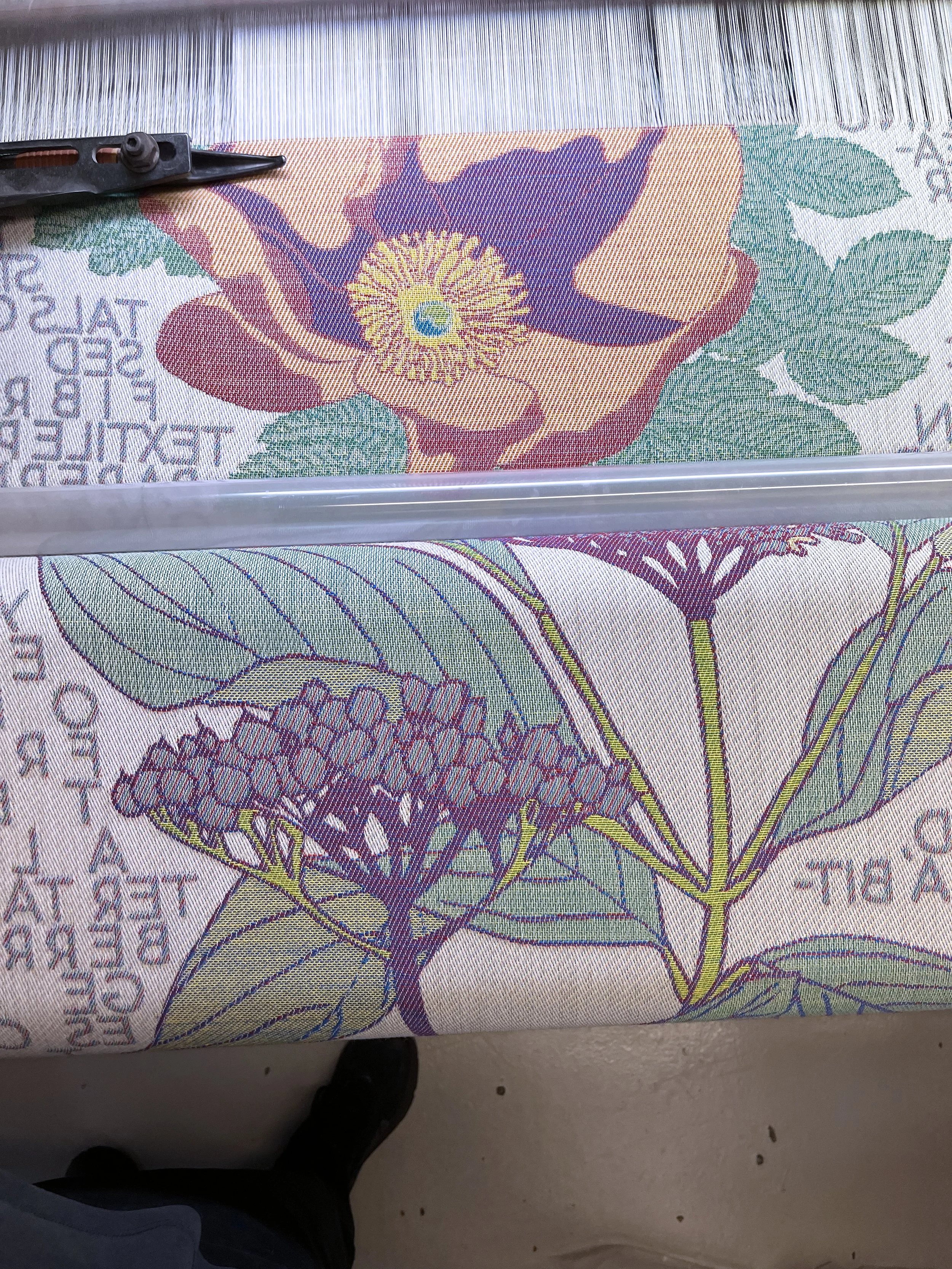
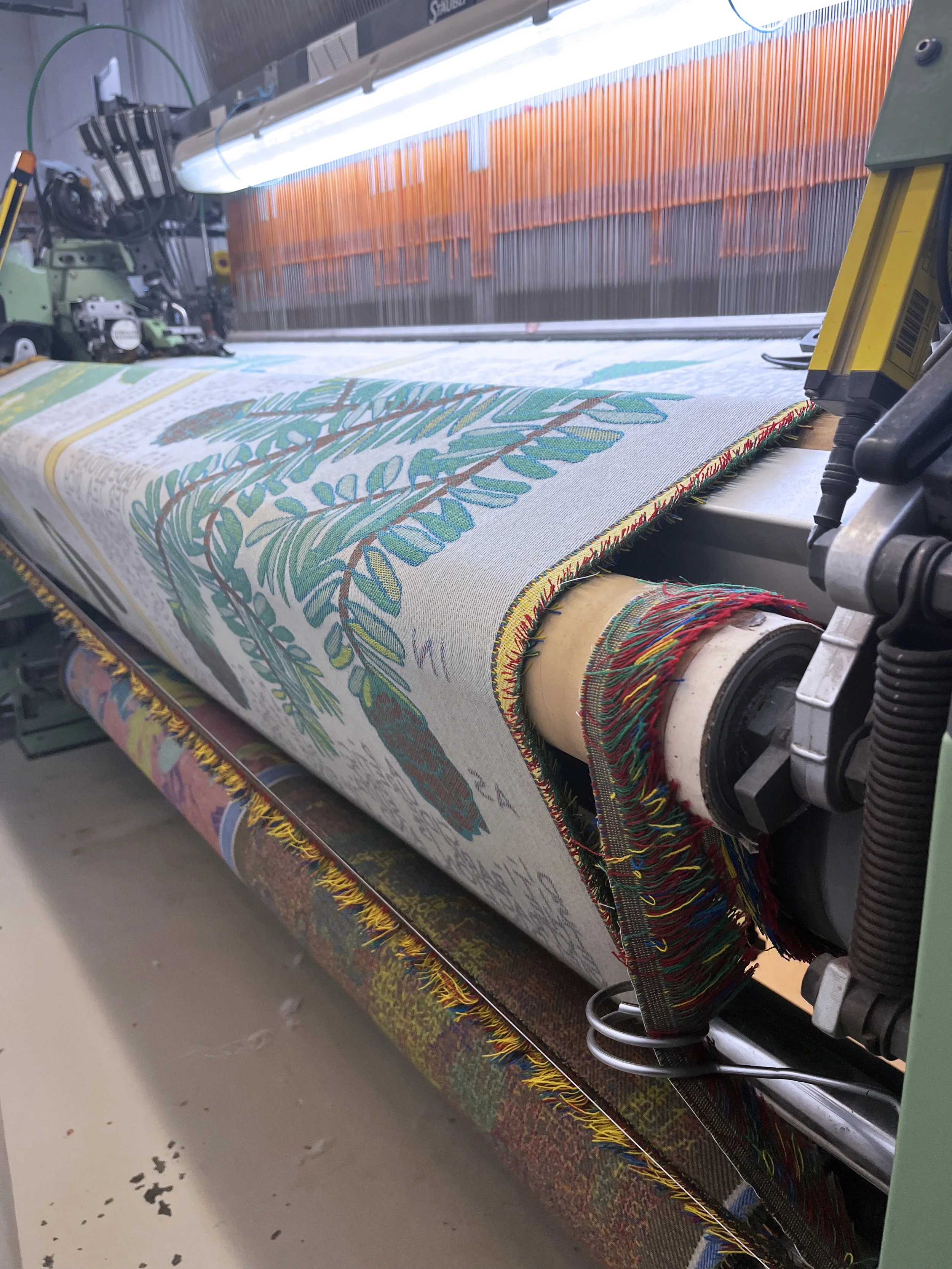
Each flag acts as a storyteller, carrying symbolic meaning related to identity, belonging, history, values, and hope. Fourteen different plants are represented, each woven as a double-sided textile: one side portrays the plant, while the other reveals an alternative narrative highlighting its overlooked or positive qualities. To encounter these new stories, one must literally shift perspective.
The choice of material and technique underscores the significance of these narratives and their historical and cultural value as carriers of knowledge. The weaving process itself becomes a way of organising and interpreting data — showing how individual observations, when woven together, can form a more holistic understanding of the world.